

The Converse controversy demands more than an apology.
OP-ED By Dr. Tamika Quinn
Black Americans are valuable enough to market to. Why does respecting us still seem negotiable?
That is the question I keep returning to after seeing the Converse campaign image that drew criticism for visual associations with Klan imagery and lynching. The white silhouette, lighting, and dangling black sneakers disturbed viewers, including me. Converse apologized, acknowledged that it got the image wrong, and said it removed it from its channels. Converse’s response
I am glad the company acknowledged the problem. I am still livid.
Let me tell you, an apology does not obligate the people you offended to immediately restore your access to their trust—or their wallets.
This history happened here
Black people were enslaved, lynched, and terrorized in this country. Our families do not encounter imagery associated with that history as detached observers studying an old photograph. For many of us, that history is personal.
And the anxiety surrounding hanging deaths is not confined to the past.
In a September 10, 2026 statement, Congresswoman Ayanna Pressley’s office cited at least 10 reported hanging deaths of Black people that year. Pressley and 59 colleagues called for comprehensive federal investigations. The figure includes deaths ruled suicide; it is neither a count of confirmed lynchings nor a complete national tally. Congressional statement
Some families have challenged official conclusions. Reporting on Juliana Nzita’s death, for example, raised questions about the absence of a full autopsy and the handling of evidence. Those concerns deserve examination, not automatic dismissal—and each case deserves conclusions grounded in its own evidence. Case reporting
That is part of the context in which this advertisement lands.
You cannot ask an audience to leave its history outside the frame simply because you intended to sell shoes.
You Want Our Dollars.
Where Is Our Dignity?
Continues After Sponsor's
Messages Below...


Who could say no?
I cannot prove the creator’s intent from a photograph. I do not need to pretend otherwise to demand accountability from the company that published it.
Who reviewed this image? What perspectives informed that review? Did anyone raise concerns? If so, what happened next?
This is where the question of inclusion becomes practical.
We do not have evidence establishing that changes to diversity, equity, and inclusion programs caused this campaign. But the controversy provides a reason to ask whether companies understand the business value of perspectives that challenge their assumptions.
Hiring Black employees is not a guarantee against an offensive campaign. Nor should Black employees bear sole responsibility for preventing one.
Leadership is responsible for building a process in which cultural knowledge matters and people can challenge a decision without risking their standing.
A seat at the table is insufficient if the person sitting there cannot influence what leaves the room.
Our purchasing decisions matter
The Associated Press reported in 2025 that Black Americans held an estimated $2.1 trillion in annual buying power, citing Nielsen research. AP reporting
Companies compete for those dollars. They also seek the cultural influence that comes with our support.
Our humanity should not require an economic justification. We deserve dignity whether we spend two dollars or two trillion. But purchasing decisions are one way consumers can express standards that a brand cannot simply acknowledge and forget.
We can withhold our business. We can support other companies. We can decide that rebuilding trust requires evidence of change.
Where is the outrage?
Remembering the Holocaust and confronting antisemitism are necessary responsibilities. Jewish people deserve protection and dignity without qualification. Black Americans deserve equally serious attention to the racial terror embedded in this nation’s own history. These obligations do not compete.
What I reject is the expectation that Black people must repeatedly explain why our pain warrants concern.
Converse should explain what its review process missed and what will change. Consumers can then decide whether that response is sufficient.
We are not required to soften our anger to make it marketable. We are not required to confuse an apology with accountability.
You want our dollars. Where is our dignity?
And if you cannot answer that question, do not assume you have earned our next purchase.

Dr. Tamika Quinn is a speaker, author, veteran, and legislative health advocate. Read more of her commentary at Tamika’s Take.
New Self-Help Book
“Blame It on the Feel of Pain”
About Detangling From Past Pain

Get ready for a transformational journey toward inner peace as indie author Max W. Miller’s new self-help release, Blame It On The Feel Of Pain, inspires readers in a witty, down-to-earth book. Truth and compassion are foretold, using poetic frames called ‘The Wises,’ and the help of opinionated little emojis bringing laughter and thought-provoking conclusions throughout.
The author encourages her readers, whom she also calls partners, to stop wrestling with the hard knocks of the past. She expresses how voluntarily walking back into time precedes trauma healing. Confronting lingering pains is a step toward strength and hope for the future. ‘Blame It’ delves into the author’s life experiences, bringing to life the importance of using Full Circle Moments to find resolutions.
Throughout Blame It On The Feel Of Pain, the reader grows to understand through a unique interpretation that what we are destined to become grows out of the years we’ve already traveled. Further, our future hinges on how we address the pains of the past. Other expressions focus on how desires in the present are carved out of having a clear vision that old, lingering strongholds must be defeated. A history of suffering is a prerequisite for becoming fed up enough to demand enjoyment now!
To Get On the Road To Overcoming Your Trauma See Her Exclusive Interview
Order Her Book Blame It On The Feel Of Pain
See Max Miller's Other Articles on The Southeast Queens Scoop


While there are brilliant persons on the Autism Spectrum celebrated today, very little media stories focus on people, especially women of color. Our co-publisher's new bio-pic "nZinga's Spectrum In 3D," is a moving and inspirational documentary on how a young Black woman RISES to overcome her challenges.
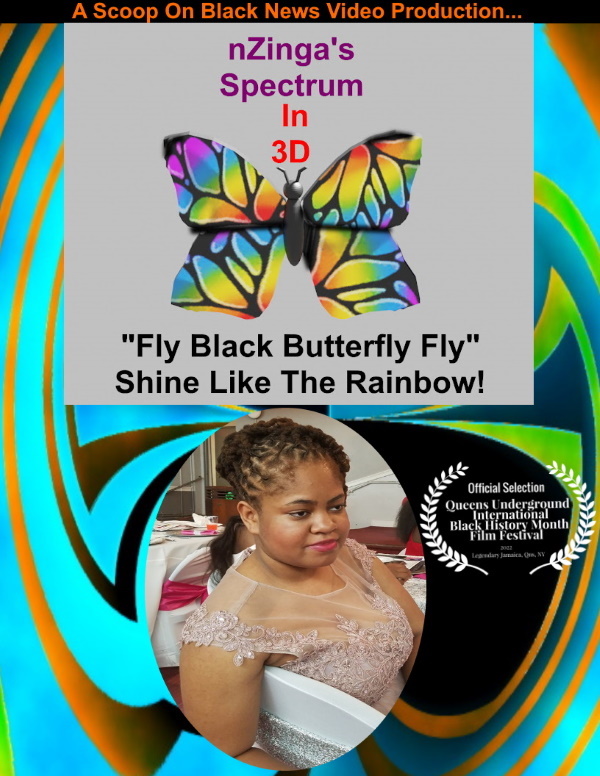
nZinga Austin is also the Co-publisher of Our Black News Scoop and Southeast Queens Scoop. The documentary of about 1/2 hr long is getting rave reviews.Checkout Nzinga's Spectrum in 3D now Click Here. Please share
 Posted by community events coordinator, Nzinga Lonstein Austin, is a prolific blogger who writes on the entertainment industry and issues for people with developmental and physical challenges.
She is presently in high school looking to have a career in video, film, and media. You can see more of her entertainment writing on Lonstein Movies.


Since you are here think about this please. Do You Want The Southeast Queens Scoop To Continue To Promote Empowering News and Events largely ignored by the corporate owned mainstream media in our area?
Since most local businesses don't have large ad budgets then please consider donating to ensure we can continue our media efforts. We appreciate all contributions ($5, $10, $15, $20, +) no amount is too small. Please donate now below or read more on donations.

No comments:
Post a Comment