
From Ideas to Assets: Why Ownership Matters for Black Creators and Entrepreneurs
"Building wealth is not only about earning income. It is also about understanding, protecting and retaining the value of what you create."
By Dr. Tara S. Merchant, J.D.

Black creativity and entrepreneurship have always played an important role in shaping culture, creating businesses and generating economic opportunity.
From entrepreneurs and inventors to authors, artists, entertainers, designers, consultants and small business owners, Black professionals continue to turn ideas into products, services, brands and businesses.
But there is an important question that deserves greater attention:
Who owns what you create?
It is easy to focus on earning money from an idea, product or service. It is equally important to understand the rights connected to that work and whether you are building an asset that you can control over time.
Income and ownership are not necessarily the same thing.
You can be paid for your work without owning the intellectual property associated with it. You can build a brand for a company without owning the trademark. You can create content for a business without necessarily retaining the rights to that content. You can develop an idea that becomes commercially successful while someone else controls the underlying asset.
Understanding that distinction can change the way you approach business.
Before signing a contract, accepting an opportunity or entering into a partnership, ask questions about ownership and control.
Who owns the work?
Who owns the intellectual property?
Who has the right to use it?
Is that right exclusive or nonexclusive?
How long does the agreement last?
Can the other party transfer the rights to someone else?
Can the work be modified?
Can it be licensed to another company?
What happens if the relationship ends?
These questions may seem complicated, but they can have long term consequences.
Why Ownership Matters for
Black Creators and Entrepreneurs
Continues After Sponsor's Messages Below...


Why Ownership Matters for
Black Creators and Entrepreneurs
Continues Below...

Your Ideas Can Have Value
Intellectual property can take many forms.
A business owner may have a trademark associated with a company name or brand. An author may own copyright in a book. A photographer may own rights to original photographs. A designer may create original artwork. An entrepreneur may develop proprietary materials, processes or other business assets.
The value of these assets may not be obvious when they are first created.
A business name that begins as a small local operation could eventually become a recognizable brand. A book that starts as a personal project could generate speaking opportunities, licensing opportunities or other business ventures. A digital platform, course or original content series could develop a commercial following.
The future value of an idea cannot always be predicted at the beginning.
That is why it is important to think about ownership before the value becomes obvious.
Read Beyond the Payment
One of the most common mistakes people can make is focusing exclusively on how much they are being paid.
The better question is:
What am I receiving, and what am I giving up in exchange for that payment?
A contract may involve compensation while also giving another party certain rights to use, reproduce, distribute, modify or commercialize your work.
That does not automatically make the agreement unfair. There are legitimate business reasons for licensing or transferring rights.
The important issue is understanding the transaction.
A license generally gives another party permission to use intellectual property under agreed upon terms while ownership may remain with the creator or rights holder. An assignment can transfer ownership of particular rights.
Those are very different arrangements.
For example, an entrepreneur may license a brand or creative asset for a specific period rather than permanently transferring ownership. The agreement might define where the asset can be used, how it can be used and for how long.
Those limitations can matter.
Partnerships Require Clarity
Ownership becomes particularly important when multiple people contribute to a business or creative project.
Friends, family members and business partners may begin an idea together with the best intentions. But informal understandings can become difficult when the business grows or circumstances change.
Who owns the company?
Who owns the brand?
Who owns the website?
Who owns the intellectual property?
Who contributed the original idea?
Who contributed money?
Who contributed services?
How are profits divided?
What happens if one person leaves?
What happens if the business is sold?
These questions should be addressed in writing.
A handshake may feel sufficient when a business is beginning, but written agreements can provide clarity when the business becomes more valuable.
Your Name and Brand Matter Too
In today's marketplace, a person's name and reputation can become significant business assets.
Entrepreneurs build personal brands through social media, speaking engagements, books, podcasts, courses, appearances and other forms of public visibility.
Creators should understand how their name, image, likeness and voice may be used in agreements they sign.
This is particularly important as technology continues to evolve.
Artificial intelligence and digital tools are creating new opportunities while also raising questions about how people's voices, images, likenesses and original content can be reproduced or used.
Contracts should clearly define what uses are authorized rather than leaving important questions open to interpretation.
Technology will continue to change, but the basic principle remains the same:
Know what rights you are giving someone else.
Ownership Is Part of Wealth Building
When people talk about building wealth, the conversation often centers on income, savings, investments and real estate.
Those are important components.
But ownership of intellectual property and business assets can also play a role in building long term economic value.
A company can become an asset.
A trademark can become an asset.
A copyrighted work can become an asset.
A portfolio of original content can become an asset.
A proprietary business system can become an asset.
The key is understanding what you actually own and how those assets can be protected and used.
Ownership does not guarantee financial success. A business can fail, an intellectual property asset may never become commercially valuable, and not every creator needs to retain every right in every transaction.
The point is not that everyone should refuse to license or sell their work.
The point is that people should understand what they are negotiating before they make the decision.
Documentation Matters
Good recordkeeping is another part of protecting what you build.
Keep copies of contracts, registrations, licenses, partnership agreements and other documents related to your business and intellectual property.
If multiple people contribute to a project, document their respective roles and ownership interests.
If you hire someone to create work for your business, understand what the agreement says about ownership of that work.
If you collaborate with another entrepreneur, creator or professional, do not assume everyone has the same understanding about who owns the finished product.
Write it down.
Clear documentation can prevent misunderstandings and provide important evidence if a disagreement develops later.
Ask Questions Before You Sign
You do not have to be an attorney to become more knowledgeable about your business and intellectual property rights.
Start by asking better questions.
What am I creating?
What do I own?
What rights am I giving away?
Am I licensing those rights or transferring ownership?
How long does the agreement last?
Can the other party transfer or sublicense those rights?
What happens when the relationship ends?
What happens if the value of the asset increases?
And perhaps most importantly:
Have I had someone qualified review this agreement before I sign it?
If a contract involves significant intellectual property, substantial financial interests or long term rights, consider consulting an experienced attorney who can explain the agreement and its potential implications.
Black entrepreneurs and creators have built businesses, brands, inventions, artistic works and cultural movements that have influenced generations.
The next step is not simply creating more.
It is understanding the value of what we create.
Economic empowerment can begin with earning income, but long term wealth can also involve ownership, control and the ability to determine what happens to the assets we build.
Your idea has value.
Your creativity has value.
Your brand has value.
Your work has value.
Create boldly. Build intentionally. Know what you own. Understand what you are signing. And protect the assets you work so hard to create.
Dr. Tara S. Merchant, J.D.
Email: merchanttara307@yahoo.com
Legal Disclaimer: Dr. Tara S. Merchant, J.D., provides legal commentary and information for educational purposes. This column does not constitute legal advice or establish an attorney-client relationship. Laws vary by jurisdiction, and readers should consult a qualified attorney regarding their individual circumstances.
Checkout This Interview With Dr. Merchant Below...
New Self-Help Book
“Blame It on the Feel of Pain”
About Detangling From Past Pain

Get ready for a transformational journey toward inner peace as indie author Max W. Miller’s new self-help release, Blame It On The Feel Of Pain, inspires readers in a witty, down-to-earth book. Truth and compassion are foretold, using poetic frames called ‘The Wises,’ and the help of opinionated little emojis bringing laughter and thought-provoking conclusions throughout.
The author encourages her readers, whom she also calls partners, to stop wrestling with the hard knocks of the past. She expresses how voluntarily walking back into time precedes trauma healing. Confronting lingering pains is a step toward strength and hope for the future. ‘Blame It’ delves into the author’s life experiences, bringing to life the importance of using Full Circle Moments to find resolutions.
Throughout Blame It On The Feel Of Pain, the reader grows to understand through a unique interpretation that what we are destined to become grows out of the years we’ve already traveled. Further, our future hinges on how we address the pains of the past. Other expressions focus on how desires in the present are carved out of having a clear vision that old, lingering strongholds must be defeated. A history of suffering is a prerequisite for becoming fed up enough to demand enjoyment now!
To Get On the Road To Overcoming Your Trauma See Her Exclusive Interview
Order Her Book Blame It On The Feel Of Pain
See Max Miller's Other Articles on The Southeast Queens Scoop


While there are brilliant persons on the Autism Spectrum celebrated today, very little media stories focus on people, especially women of color. Our co-publisher's new bio-pic "nZinga's Spectrum In 3D," is a moving and inspirational documentary on how a young Black woman RISES to overcome her challenges.
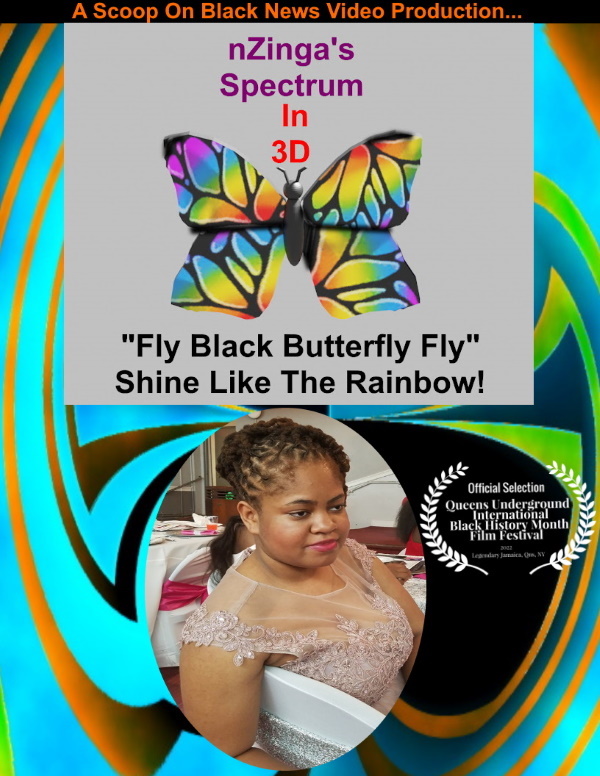
nZinga Austin is also the Co-publisher of Our Black News Scoop and Southeast Queens Scoop. The documentary of about 1/2 hr long is getting rave reviews.Checkout Nzinga's Spectrum in 3D now Click Here. Please share
 Posted by community events coordinator, Nzinga Lonstein Austin, is a prolific blogger who writes on the entertainment industry and issues for people with developmental and physical challenges.
She is presently in high school looking to have a career in video, film, and media. You can see more of her entertainment writing on Lonstein Movies.


Since you are here think about this please. Do You Want The Southeast Queens Scoop To Continue To Promote Empowering News and Events largely ignored by the corporate owned mainstream media in our area?
Since most local businesses don't have large ad budgets then please consider donating to ensure we can continue our media efforts. We appreciate all contributions ($5, $10, $15, $20, +) no amount is too small. Please donate now below or read more on donations.

No comments:
Post a Comment