
Black Health & Wealth Virtual Summit Brings Experts Together to Address Health Equity and Economic Empowerment

By Renee Williams and Kamau Austin | For Scoop Publications
Community leaders, physicians, entrepreneurs, technologists, and advocates gathered virtually for the Black Health & Wealth Virtual Summit, an ambitious two-part event designed to address some of the most pressing challenges facing Black communities today: persistent health disparities and the widening racial wealth gap.
 Curated and hosted by Kamau Austin, publisher of Southeast Queens Scoop, the Black News Scoop, Minority Business Finance Scoop and other digital publications the summit brought together a diverse group of experts and
practitioners to share practical knowledge, lived experiences, and
innovative solutions.
Curated and hosted by Kamau Austin, publisher of Southeast Queens Scoop, the Black News Scoop, Minority Business Finance Scoop and other digital publications the summit brought together a diverse group of experts and
practitioners to share practical knowledge, lived experiences, and
innovative solutions.
The first session focused on health equity and prevention, while the second session explored strategies for building wealth through business ownership, real estate investment, cooperative economics, and access to capital.
Together, the conversations reinforced a powerful message: health and wealth are deeply interconnected pillars of long-term community stability and generational progress.
Prevention and Lifestyle as the Foundation of Health
 One of the core themes of the summit was the importance of prevention through lifestyle changes. Afi Okon of the American Obesity Foundation emphasized nutrition education and practical strategies through the organization’s campaign “Let’s Make Healthy Our New Happy.”
Okon stressed that improving community health begins with building food literacy and making small, sustainable dietary adjustments. She encouraged participants to rethink their approach to meals by prioritizing vegetables, reducing sugar and sodium, and viewing food as a form of medicine.
“Half of your plate should be vegetables,” Okon advised, encouraging participants to increase water intake, moderate portions, and reduce highly processed foods.
She also emphasized that health goes beyond diet and includes
lifestyle patterns such as sleep, stress management, and consistent
movement. Even modest habits such as taking daily walks, stretching, or
dancing can significantly improve long-term health outcomes.
American Obesity Foundation Below...

Mental Health and Social Support Systems
Mental health was another key focus of the summit.
 Aiysha Simon of Moving Forward Therapy highlighted the
importance of understanding mental health as a continuum that includes
emotional, psychological, and social well-being.
Aiysha Simon of Moving Forward Therapy highlighted the
importance of understanding mental health as a continuum that includes
emotional, psychological, and social well-being.
Simon emphasized that mental health maintenance involves a combination of sleep hygiene, regular physical activity, mindfulness practices, social connection, and balanced nutrition.
“Mental health should be treated like a physical injury,” Simon explained. “If something is wrong, we should seek help, whether from friends, family, or professionals.”
She encouraged participants to use available support systems including the 988 Suicide & Crisis Lifeline, the SAMHSA treatment hotline, and findtreatment.gov for locating mental health resources.
Autism, Caregiving, and Disability Inclusion
 |
| Quentin Mezetin and His 2 Sons On The Autism Spectrum |
Quentin Mezetin, founder of I Am Dad, shared his personal journey navigating autism within his family. He described the emotional challenges many families experience following diagnosis, including denial, guilt, and isolation.
Mezetin emphasized the importance of learning advocacy tools such as understanding Individualized Education Programs (IEPs), accessing services, and planning long-term transitions for children entering adulthood.
He also discussed the impact of ableism, describing it as systemic barriers and lowered expectations placed on people with disabilities.
“Caregivers must also take care of themselves,” Mezetin advised, encouraging parents to prioritize rest, seek support networks, and plan financially for the future.
Audience members also shared personal experiences, reinforcing the importance of early intervention, community awareness, and inclusive support systems. To read more articles on Quentin Mezetin Tap or Click Here
Dr. Alexis Donald Represented in Medicine and Inspiring Luxury Publishing
 |
| Dr. Alexis Donald Publisher of Mommy I Want to be a Doctor |
Dr. Alexis Donald, a family medicine physician and author, addressed the importance of increasing Black representation in healthcare.
Donald emphasized the importance of preventive care through regular medical visits and monitoring key health indicators such as blood pressure, cholesterol, and A1C levels.
However, she also discussed systemic barriers within the healthcare system—including short appointment times and administrative burdens—that can limit trust between patients and providers.
“Representation matters,” Donald said. “Patients often feel more comfortable when they see providers who understand their culture and experiences.”
Donald also highlighted her children’s book series, "Mommy, I Wanna Be a Doctor", designed to inspire Black children to pursue careers in healthcare and science. Her book is based on her own remarkable journey, this captivating story encourages children to dream big, believe in themselves, and fearlessly pursue their aspirations.
As the first medical doctor in her family, Dr. Alexis has always been driven by a passion for medicine and a desire to make a difference in the world. Her inspiring tale begins with her childhood dreams and takes readers on a heartfelt journey of determination, resilience, and triumph. To Order Her Book Click Here or on Amazon.
To see our exclusive interview with Dr. Donald Tap here.
Registered Nurse Shanika Small Addressing the Hidden Epidemic of Chronic Wounds
 Shanika Small of Wound Care Warriors shed light on a growing but often overlooked health crisis: chronic wounds and diabetic complications.
Small explained that diabetic foot ulcers, pressure ulcers, and venous ulcers can lead to serious complications including infection, gangrene, and amputation if not treated early.
She cited alarming local data indicating that Queens recorded hundreds of below-the-knee amputations in recent years, emphasizing the urgent need for preventative care.
Preventative measures include controlling blood sugar, performing daily foot checks for diabetics, maintaining proper nutrition, wearing protective footwear, and seeking early medical care.
Small also shared her goal of opening a hyperbaric wound care clinic in Southeast Queens to provide specialized treatment and prevention services. Learn more about Shanika's Wound Care Warriors services below...
 |
| Visit Wound Care Warriors |
Dr. Tamika Quinn Promotes Health as a Form of Generational Wealth

Dr. Tamika Quinn, founder of Glam Given Life and Motivation and a two-time stroke survivor, delivered one of the summit’s most powerful personal testimonies.
Quinn shared her journey recovering from postpartum strokes and a pulmonary embolism, underscoring how health crises can dramatically impact financial stability.
“When health collapses, wealth often collapses with it,” Quinn explained.
She emphasized that medical emergencies can drain family savings, reduce earning capacity, and place caregiving burdens on loved ones.
Quinn encouraged participants to adopt practical daily habits such as walking regularly, increasing plant-based foods, drinking sufficient water, and prioritizing quality sleep. You can keep in touch with Dr. Quinn at: www.YourFavoriteStrokeSurvivor.com
Technology Innovations Addressing Maternal Health Disparities
 |
| Medical Researcher and AI and App Innovator Renee Williams |
Renee Williams, founder of the AI app and health platform CycleSync, introduced an innovative technology designed to help women monitor reproductive and maternal health.
CycleSync allows users to track symptoms related to menstruation, pregnancy, postpartum recovery, and menopause. The platform converts self-tracked data and wearable-device information into structured reports that patients can share with their doctors.
Williams emphasized that the platform aims to empower women to better
advocate for themselves in healthcare settings and help address
maternal health disparities affecting Black women.
👉 If you already know this problem in your bones and want to help build community, you can learn more about supporting CycleSync here We are actively building and planning our next stage of growth at TryCycleSync.com
If you’re an investor, ally, or community member who believes Black women deserve tools — not just apologies — you can review our investment materials here:
👉 CycleSync Investment Deck
Black Health & Wealth Virtual Summit 2.0
Event Continues After
Sponsor's Messages Below...

Please Support Our Ad Sponsors Who Make This Community News Blog Possible. And Don't Forget To Tell Them You Saw Their Ad in The Scoop!
UPlifting Black Health & Wealth
Virtual Summit 2.0 Continues Below...
From Health to Wealth: Building Economic Power in Black Communities
The second session of the summit shifted focus from health to economic empowerment, exploring strategies for closing the racial wealth gap and building long-term financial stability in Black communities.
Speakers including Phil Andrews, Pierre Clark, Dr. Jamila Walida Simon, Chuck Starks, and Gary L. Smith shared insights on business ownership, real estate investment, and collective economic strategies.
Phil Andrews On
Economic Organizing and
Community Institutions
 |
| SBA Award Winner Phil Andrews |
Andrews explained that chambers of commerce can play a crucial role in connecting Black entrepreneurs to capital, mentorship, and strategic partnerships.
He encouraged participants to think beyond individual entrepreneurship and embrace collective ownership models.
“We need to own the businesses on our main streets,” Andrews said. “Ownership changes everything.”
He highlighted the importance of building networks, serving on boards, and forming strategic partnerships that allow communities to control economic resources and keep wealth circulating locally. For more information on the programs and activities of the Long Island African American Chamber of Commerce (LIAACC) Tap or Click Here or to inquire about 100 Black Men of Eastern NY, visit: www.100bmeny.org
Pierre Clark Advocated Community Wealth Building Through Ownership
 Pierre Clark, a Harvard-trained entrepreneur and advocate for community wealth building, discussed the structural challenges that contribute to the racial wealth gap.
Clark shared research suggesting that under current trends, it could take centuries to close the racial wealth gap.
He emphasized that wealth is largely created through ownership of assets, including real estate and businesses.
“If you don’t own assets, you don’t control the profit,” Clark explained.
Clark encouraged attendees to invest locally, employ community members, and support businesses that keep economic activity circulating within the community. You can read more of Pierre's insights on our websites click here. You can contact Pierre Clark at http://numillenniumcapital.lovable.app.
Innovative Housing andWorkforce Models

Dr. Jamila Walida Simon, CEO of multiple organizations including Radical Mama Housing and Health Is Wealth Housing, discussed innovative models for community development.
Simon described programs that help residents of public housing develop financial literacy, employment skills, and pathways to homeownership.
Through escrow-based cohort programs, her organization has returned millions of dollars to participating families.
Her programs combine financial education, entrepreneurship training, and peer mentorship to help families build stability and generational wealth. To touch base with Dr. Simon, contact her at: radicalmamahousingllc@gmail.com .
Real Estate as a Pathway to Wealth
 |
| Self-Made Millionaire Chuck Starks |
Entrepreneur and author Chuck Starks, whose book Get Rich While Black, focuses on financial empowerment, emphasized real estate ownership as a practical wealth-building strategy.
Chuck shared how he was once recognized as building one of the fastest growing businesses in the US, in computer technology, with his earlier Inc. 500 listed company. He cited problems with partners and other issues that derailed the business and he was bankrupt at one point.
However, he revealed him and his wife invested in real estate in destressed Black communities over time and now generates $200,000 dollars a year in passive residential real estate income. He also mentioned his net worth is now at about $3.1 million dollars.
He encouraged participants to consider strategies such as house hacking, where homeowners live in one unit of a multi-family property while renting out the others.
This strategy allows owners to build equity and generate passive income simultaneously. To read more of his articles on Scoop News Blogs click here.
See Our Exclusive Interview with Chuck Starks. You can obtain Chuck's Get Rich While Black revised Edition below.
 |
| Tap or Click Here To Order Get Rich While Black |
Strategic Business Acquisition andPassive Income
Financier, Business & Commercial Real Estate
Investor and business broker Gary Smith
 |
| Financier, Business & Commercial Real Estate Investor and business broker Gary Smith |
Commercial real estate broker Gary L. Smith, founder of SwanMoney, discussed opportunities for acquiring existing businesses and income-producing properties.
Smith emphasized the importance of assembling a strong advisory team—including accountants, attorneys, and brokers—to identify strategic acquisition opportunities.
He also highlighted the coming “silver tsunami,” a massive wave of business ownership transitions of trillions of dollars as aging entrepreneurs retire without successors.
For aspiring investors, this represents a potential opportunity to acquire profitable businesses and assets. Learn more about Gary's Book and his articles below...
"5 Keys to Create Passive Income With
Commercial Real Estate."

 |
| Checkout Gary's Articles | Order On Amazon |
AI Entrepreneur Extraordinaire
Eric Hamilton
Shared Future Tech Moves


Eric Hamilton is an award-winning AI filmmaker, technology leader, and President & Executive Producer of EHAMX Studios, a next-generation AI film company pioneering cinematic storytelling through generative artificial intelligence. With over 30 years of experience across Google, Yahoo!, Cisco, and Dow Jones, he blends executive leadership with creative innovation to redefine how stories are made and distributed.
His feature film EHAM Classified won Best Sci-Fi Film at the New York International Film Festival, and his AI-generated music work has been featured on CBS News. Through his signature “Machine-Perspective Cinema” style, Hamilton explored the intersection of artificial intelligence, culture, and human instinct—shaping the future of film in the AI era.
Eric Hamilton's Shared His Electrifying
Movie Trailer Below
Eric Hamilton is an award-winning AI filmmaker, technology leader, and President & Executive Producer of EHAMX Studios, a next-generation AI film company pioneering cinematic storytelling through generative artificial intelligence. With over 30 years of experience across Google, Yahoo!, Cisco, and Dow Jones, he blends executive leadership with creative innovation to redefine how stories are made and distributed.
His feature film EHAM Classified won Best Sci-Fi Film at the New York International Film Festival, and his AI-generated music work has been featured on CBS News. Through his signature “Machine-Perspective Cinema” style, Hamilton explored the intersection of artificial intelligence, culture, and human instinct—shaping the future of film in the AI era.
Movie Trailer Below
Eric “EHam” Hamilton: AI and the Future of Entrepreneurship
Award-winning AI filmmaker and longtime technology innovator Eric “EHam” Hamilton closed out the Wealth segment with a glimpse into the future of entrepreneurship. A veteran coder and tech pioneer with decades of experience connected to Silicon Valley companies, Hamilton explained that although he has worked in technology for years, he has been experimenting with AI filmmaking for about a year.
Hamilton demonstrated how artificial intelligence is democratizing the film industry. In the past, creating a science-fiction film required multimillion-dollar budgets and large production teams. Yet Hamilton showed a trailer for a sci-fi project he created largely with AI tools “in his pajamas” over about ten weeks, a project that went on to win awards at several respected film festivals.
While the filmmaking example captured the audience’s imagination, Hamilton emphasized the broader power of AI for entrepreneurs. Today’s AI platforms, he said, function like “an assistant with a PhD in everything,” helping users generate ideas, analyze information, and solve problems more efficiently.
Hamilton compared the rise of AI to the early days of Google. Before Google, people relied on 411 or the Yellow Pages, but once people experienced the power of online search, those tools quickly became obsolete. For entrepreneurs today, Hamilton said AI can help tackle the classic “Entrepreneur’s Dilemma” — limited time, limited budgets, and intense competition — acting as a smart assistant that never sleeps and can dramatically increase productivity.
Black Health & Wealth Virtual Summit
The success of the Black Health & Wealth Virtual Summit was made possible in large part by the dedication and leadership of an extraordinary group of women who served as co-hosts for the event. These accomplished leaders not only helped guide the conversation throughout the evening, but also embody the very spirit of empowerment, unity, and economic advancement the summit was created to promote.

MSS Francois, CEO, media personality, and transformational speaker, brought powerful energy and inspiration to the summit. As the creator and host of The Mss Francois Show, she is widely known for empowering women through humor, resilience, and real conversations about personal growth and success. Her dynamic leadership helped set an uplifting and motivational tone for the entire event.

Tyria Collins, a Laurelton, Queens native with a background in finance and community service, contributed thoughtful insight and creativity to the evening’s discussions. A self-described “bootstrapper,” Collins brings both entrepreneurial spirit and a passion for uplifting others in the community. Her perspective added warmth, authenticity, and encouragement to the summit’s conversations.

Rahni Sumler, founder of Digital Dandelions Technical Solutions LLC, provided valuable insight into entrepreneurship and business development. As a consultant who helps small and minority-owned businesses prepare for major government and private sector contracts, she understands the systems needed to help businesses grow and scale. Her contributions helped ground the summit’s economic conversations in practical strategies for long-term success.
Together, these remarkable women exemplify leadership, resilience, and the collaborative spirit necessary to build stronger, healthier, and more prosperous communities. Their invaluable assistance in co-hosting and helping direct the Black Health & Wealth Virtual Summit reflects a shared commitment to empowering our people and advancing economic opportunity throughout Southeast Queens and beyond.
Turning Conversation into Action
Throughout the summit, participants shared resources, tools, and next steps designed to turn dialogue into real-world action.
Host Kamau Austin announced plans to compile a resource guide featuring speaker contacts, educational materials, and recommended programs.
Several participants also expressed interest in future collaborations, including partnerships with healthcare providers, entrepreneurs, and community organizations.
A Blueprint for Community Empowerment
The Black Health & Wealth Virtual Summit demonstrated that solving community challenges requires a comprehensive approach that addresses both physical well-being and economic opportunity.
By bringing together experts in healthcare, business, technology, and community advocacy, the summit created a powerful platform for collaboration and knowledge sharing.
And according to organizer Kamau Austin, the event represents the beginning of a broader movement.
“This summit is about turning knowledge into action,” Austin said. “Our goal is to help communities build healthier lives and stronger economic futures.”
Back By Popular Demand

New Self-Help Book
“Blame It on the Feel of Pain”
About Detangling From Past Pain

Get ready for a transformational journey toward inner peace as indie author Max W. Miller’s new self-help release, Blame It On The Feel Of Pain, inspires readers in a witty, down-to-earth book. Truth and compassion are foretold, using poetic frames called ‘The Wises,’ and the help of opinionated little emojis bringing laughter and thought-provoking conclusions throughout.
The author encourages her readers, whom she also calls partners, to stop wrestling with the hard knocks of the past. She expresses how voluntarily walking back into time precedes trauma healing. Confronting lingering pains is a step toward strength and hope for the future. ‘Blame It’ delves into the author’s life experiences, bringing to life the importance of using Full Circle Moments to find resolutions.
Throughout Blame It On The Feel Of Pain, the reader grows to understand through a unique interpretation that what we are destined to become grows out of the years we’ve already traveled. Further, our future hinges on how we address the pains of the past. Other expressions focus on how desires in the present are carved out of having a clear vision that old, lingering strongholds must be defeated. A history of suffering is a prerequisite for becoming fed up enough to demand enjoyment now!
To Get On the Road To Overcoming Your Trauma See Her Exclusive Interview
Order Her Book Blame It On The Feel Of Pain
See Max Miller's Other Articles on The Southeast Queens Scoop

While there are brilliant persons on the Autism Spectrum celebrated today, very little media stories focus on people, especially women of color. Our co-publisher's new bio-pic "nZinga's Spectrum In 3D," is a moving and inspirational documentary on how a young Black woman RISES to overcome her challenges.
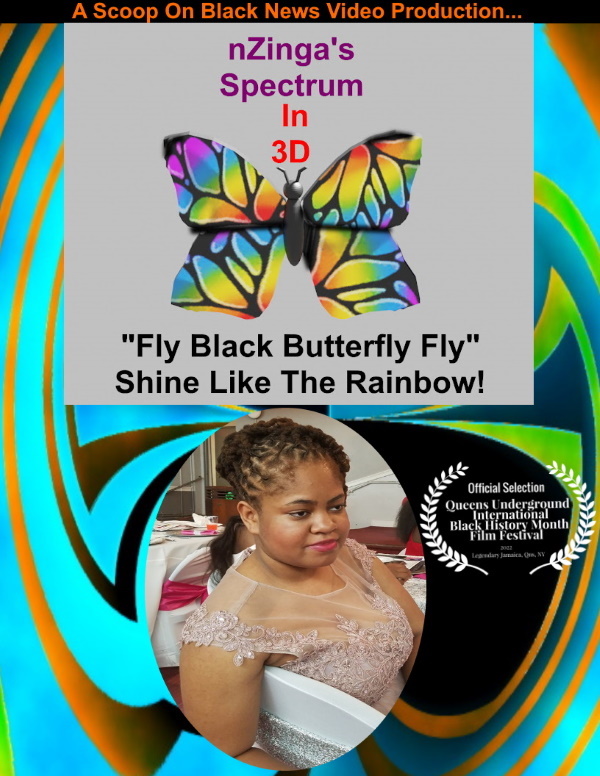
nZinga Austin is also the Co-publisher of Our Black News Scoop and Southeast Queens Scoop. The documentary of about 1/2 hr long is getting rave reviews.Checkout Nzinga's Spectrum in 3D now Click Here. Please share
 Posted by community events coordinator, Nzinga Lonstein Austin, is a prolific blogger who writes on the entertainment industry and issues for people with developmental and physical challenges.
She is presently in high school looking to have a career in video, film, and media. You can see more of her entertainment writing on Lonstein Movies.


Since you are here think about this please. Do You Want The Southeast Queens Scoop To Continue To Promote Empowering News and Events largely ignored by the corporate owned mainstream media in our area?
Since most local businesses don't have large ad budgets then please consider donating to ensure we can continue our media efforts. We appreciate all contributions ($5, $10, $15, $20, +) no amount is too small. Please donate now below or read more on donations.

No comments:
Post a Comment